☰


Biodiversity International Journal
artificial intelligencebiodiversityclimate changecommunity engagementconservationfood securitygenetic technologiesmedicinal discoveriesremote sensingsustainability
This article delves into the recent advancements in biodiversity conservation, highlighting the transformative role of technology, particularly artificial intelligence (AI), remote sensing, and genetic technologies. It discusses how these innovations are revolutionizing conservation efforts by enabling efficient data analysis, monitoring ecosystems, and enhancing species resilience. The article emphasizes the importance of community engagement and sustainable practices in conservation, showcasing successful initiatives worldwide. It also explores the critical role of biodiversity in climate change mitigation and its significance for human health and food security. By integrating technology with traditional conservation methods, the article envisions a sustainable future where biodiversity thrives alongside human development.
 Bookmark
 More like this
portal.nifa.usda.gov
agricultureai in farmingartificial intelligenceeducational programssustainability
The AI Institute at the University of Illinois is pioneering advancements in artificial intelligence to tackle pressing agricultural challenges. With the goal of enhancing agricultural resilience, management, and sustainability, the AIFARMS initiative focuses on integrating AI technologies into farming practices. This includes improving crop yields while minimizing environmental impacts, utilizing autonomous systems for efficient farming, and developing educational programs to prepare a skilled workforce in AI and agriculture. The institute collaborates with farmers and industry partners to ensure practical applications of research findings, aiming to feed a growing global population sustainably by 2050.
Bookmark More like thishttps://oyelabs.com
September 12, 2025
aiartificial intelligenceoil and gassustainabilityuse cases

Discover how AI in oil and gas industry is providing benefits like cost reduction, safety improvements, and efficiency. Explore top use cases now!
Explore the transformative impact of AI in the oil and gas industry, where innovative solutions are enhancing efficiency, reducing costs, and driving sustainability. This article delves into various use cases, including predictive maintenance, drilling optimization, and energy consumption management, showcasing how AI empowers companies to make smarter, data-driven decisions. With a focus on real-world examples, the piece highlights the benefits of AI, such as improved operational efficiency, cost reduction, and enhanced safety measures. As the industry evolves, AI is positioned as a key player in shaping a more sustainable and resilient future for oil and gas operations.
Bookmark More like this@informatica
ai agentscloud solutionsdata managementesg sustainabilityintelligent data managementsustainability
How companies like Ford Credit and Federated Hermes accelerate ESG reporting and power sustainability with Informatica Intelligent Data Management Cloud
Informatica has unveiled its Intelligent Data Management Cloud (IDMC) aimed at enhancing ESG (Environmental, Social, and Governance) sustainability. This innovative platform is designed to help organizations like Ford Credit and Federated Hermes streamline their ESG reporting processes and drive sustainability initiatives. By leveraging advanced data management capabilities, IDMC empowers businesses to make informed decisions that align with their sustainability goals, ultimately fostering a more responsible and transparent approach to data utilization in the context of ESG compliance.
Bookmark More like thisPwC
artificial intelligenceawscustomer experiencecybersecuritydata modernizationhospitalitysustainabilitytravel
Discover how PwC and AWS can help transform the travel industry with innovative solutions, personalized experiences, and enhanced cybersecurity measures. Gain a competitive edge today.
Explore how AWS is revolutionizing the travel and hospitality industry through innovative solutions that enhance customer experiences, improve operational efficiency, and bolster cybersecurity. This collaboration between PwC and AWS empowers companies to leverage advanced technologies like AI and machine learning, ensuring they stay competitive in a rapidly evolving market. Discover the transformative potential of personalized services, data modernization, and sustainable practices that are reshaping the future of travel and hospitality.
Bookmark More like thisojs.sgsci.org
artificial intelligencedigital technologiespalm oil industryqualitative literature reviewsustainability
This article explores the transformative potential of artificial intelligence (AI) and digital technologies in the palm oil industry, addressing the increasing pressures for sustainability and productivity. Through a qualitative literature review of 80 peer-reviewed articles, it identifies key areas where AI impacts the sector, including precision agriculture, supply chain transparency, and environmental monitoring. The findings highlight how AI enhances yield optimization, improves supply chain transparency via blockchain, and supports environmental compliance. However, challenges such as low digital literacy among smallholders and infrastructure limitations hinder widespread adoption. The study emphasizes the need for comprehensive strategies that incorporate technological innovation and capacity building to fully leverage AI's benefits in the palm oil industry.
Bookmark More like thisny.fes.de
artificial intelligenceclimate changeglobal governancemultilateralismun summit
Ongoing crises keep multilateralism in turmoil, but ambitious reforms are still on the table. What to expect from the 2024 UN Summit of the Future?
The upcoming UN Summit of the Future in September 2024 aims to address the pressing challenges of multilateralism amidst ongoing global crises. With a focus on reforming international institutions, the summit seeks to tackle issues such as climate change, pandemics, and the regulation of emerging technologies like Artificial Intelligence (AI). UN Secretary-General António Guterres emphasizes the need for a new international agency to oversee AI, akin to the International Atomic Energy Agency for nuclear power. However, the current geopolitical climate, marked by tensions over Ukraine and Gaza, raises questions about the feasibility of achieving meaningful agreements. The summit presents an opportunity for civil society to advocate for a stronger multilateral system and to engage in discussions about the future of global governance.
Bookmark More like thisCollege of Agriculture
artificial intelligencedronesfarmingkansas state universityprecision agricultureresearchsustainabilitytechnology
Dr. Deepak Joshi, a precision agriculture extension specialist at Kansas State University, is transforming the agricultural landscape by integrating cutting-edge technologies like drones, sensors, and AI into farming practices. His research focuses on enhancing decision-making tools that improve profitability and sustainability for farmers in Kansas and beyond. With a background in subsistence farming, Joshi emphasizes the importance of practical applications of technology in agriculture. His work at the Flickner Innovation Farm connects advanced research with real-world farming challenges, aiming to develop AI-driven solutions that provide actionable insights for growers. Joshi's vision for the future of agriculture highlights the potential of AI to revolutionize farming practices, making them more efficient and resilient, ultimately benefiting both local and global agricultural communities.
Bookmark More like thiswww.stockholmresilience.org
biodiversityclimate changeecosystem managementenvironmental scienceglobal processesplanetary boundariesresiliencesustainability
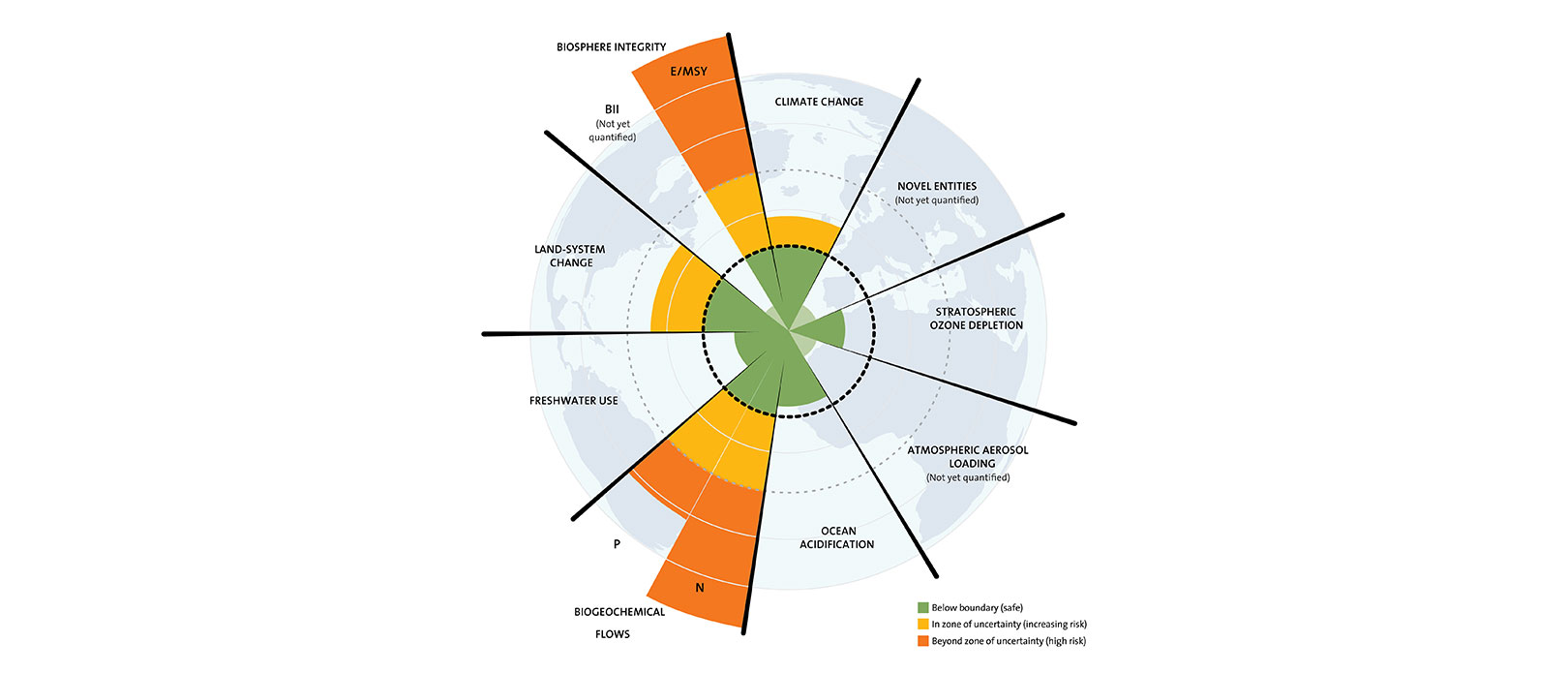
The planetary boundaries framework highlights the rising risks from human pressure on nine critical global processes that regulate the stability and resilience of the Earth
The planetary boundaries framework, first proposed in 2009, identifies nine critical global processes that regulate the stability and resilience of the Earth. A recent update in 2023 quantified these processes, revealing that six out of nine boundaries have been crossed, increasing the risk of significant environmental changes. This framework emphasizes the interdependence of these boundaries, highlighting the need for holistic decision-making in sustainability efforts. The research has garnered substantial interest and is utilized in various fields, including science, policy, and practice, to guide humanity towards a sustainable future.
Bookmark More like thisop.europa.eu
artificial intelligenceeducationhigher educationsustainabilityswedenvocational training
The Education and Training Monitor 2024 provides a comprehensive overview of Sweden's educational landscape, focusing on sustainability in learning, early childhood education, school education, vocational training, higher education, and adult learning. It highlights the integration of sustainability into curricula, the challenges faced by students from diverse backgrounds, and the government's initiatives to enhance educational quality and accessibility. The report emphasizes the importance of equipping future generations with the skills needed for a sustainable future, including the introduction of artificial intelligence as a subject in upper-secondary schools. This document serves as a vital resource for educators, policymakers, and stakeholders in the education sector, aiming to foster a more inclusive and effective educational environment in Sweden.
Bookmark More like this My account
 Password
 Logout
 Articles
 My account
 Register







 Loading more...